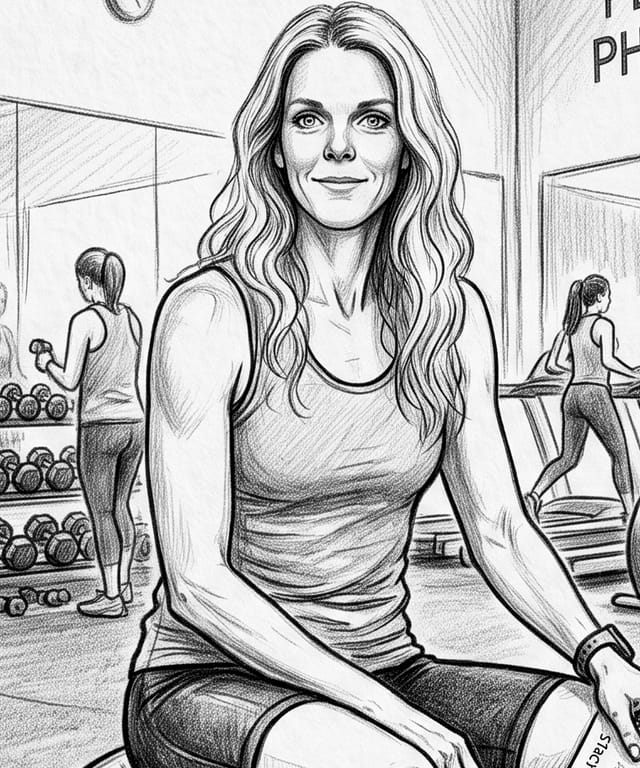
Training Through Menopause
Stacy Sims' evidence-based shift for women in midlife: lift heavy, sprint short, jump, and eat enough protein. The old advice (lighter weights, more cardio, eat less) is exactly wrong for the menopause transition.
Prioritise heavy resistance training 2 to 3 sessions/week, lower reps with real load and good form (think hard by the last few reps); movement quality first if new
Heavy load is the stimulus that preserves muscle and strength as estrogen falls.
Add sprint interval training Short, all-out efforts of ~30 seconds or less with full recovery; a handful of rounds
Short sprints improve body composition and fitness without the cortisol cost of long intervals.
Include plyometrics Small doses of jump training (e.g. squat jumps, 8 to 10 reps, build to 2 sets)
Impact loading stimulates bone, helping protect against menopausal bone loss.
Avoid long medium-intensity intervals Keep hard intervals under ~60 seconds; do not make long, moderate cardio your main tool for body composition
Intervals past a minute drive cortisol without extra body-composition benefit.
Go protein-forward, and do not undereat Aim well above the basic RDA, around 1.8 to 2 g/kg/day, roughly 30g per meal; eat in the morning rather than training fasted
More protein is needed to maintain muscle through menopause; under-eating accelerates loss.
Take creatine daily 5g creatine monohydrate per day; best supported for women's muscle and strength, with possible cognitive benefit
Creatine supports strength, and may benefit cognition, in midlife women. Pooled randomized trials found bone density unchanged, so it is not a bone treatment (see our Creatine for Women in Midlife page).
Falling estrogen reduces the muscle and bone signals women relied on, so low-intensity work no longer maintains them.
View sources
Dr. Stacy Sims: sprint interval training
Training During Perimenopause: heavy lifting, sprint intervals and protein (Dr. Stacy Sims)
How to Power Your Way Through Menopause: strength, sprints and plyometrics (Dr. Stacy Sims)
Menopause 2.0: training and nutrition for the transition (Dr. Stacy Sims)
Not medical advice. This page is for education only and is not a substitute for professional medical care. Consult a qualified clinician before changing your health routine.
Independent curation. YourProtocol is an independent platform. This protocol is based on the publicly available work of Stacy Sims and is not created, reviewed, endorsed by, or affiliated with Stacy Sims or Exercise Physiologist / Researcher.
Is this for you
- Women in perimenopause or menopause
- Midlife women told to just do more cardio
- Anyone wanting to protect muscle and bone with age
- Women new to lifting heavy
Cautions
- This is higher-intensity training; build a base of good movement and technique before loading heavy, and progress gradually
- It is not all-or-nothing; start with one or two pillars and add over time
- Menopause symptoms and hormone therapy are medical decisions; discuss options with your doctor, this protocol is about training and nutrition, not a substitute for medical care
- Do not undereat: the goal is fuelling to maintain muscle, not restriction
- Educational only, not medical advice
Some links earn us a commission. It never affects our picks or grades. See our affiliate disclosure.