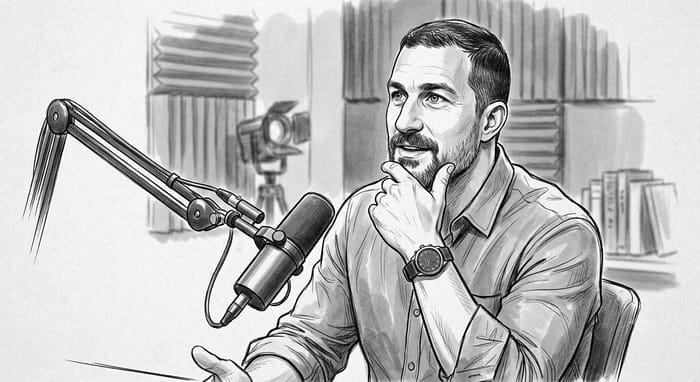
Controlling Your Dopamine
Huberman's framework for protecting motivation: manage dopamine so your baseline stays high, instead of chasing peaks that leave you flat. Mostly behaviour, a little supplementation, used carefully.
Reward the effort, not just the outcome Tell yourself the hard part is the point
If you can subjectively attach the good feeling to the friction itself, the work becomes self-reinforcing. This is the single most durable dopamine tool he describes.
Make rewards intermittent and variable Don't celebrate every win the same way
Predictable rewards every time blunt motivation. Vary how and when you reward yourself, and occasionally remove a reward (skip the music on a run, say) so the peaks don't become expected.
Stop stacking stimulants on what you want to keep loving No pre-workout/energy drinks/stimulants every single time
Layering caffeine, pre-workout or prescription stimulants onto an activity every time raises the threshold for enjoying it later. Keep some sessions 'clean'.
Respect the trough after a peak After a big high, don't chase another
A dip below baseline after a spike is guaranteed. Recognising it (rather than reaching for the next hit) lets your baseline recover, which is where steady motivation lives.
Build dopamine the cheap, durable way Morning sunlight, exercise, cold exposure, sleep, real social connection
These raise baseline dopamine sustainably without a crash. Deliberate cold exposure in particular gives a long, clean rise (see his cold protocol).
Mind your caffeine source and pairing Favour sources like yerba mate; don't pair caffeine with every pleasure
Caffeine can be mildly protective of dopamine neurons, but habitually pairing it with rewarding activities ties your enjoyment to the stimulant.
L-Tyrosine, used intermittently 500 to 1000mg, ~30 to 45 min before focused work, not daily
A dopamine precursor that can sharpen focus and drive for a work bout. He frames it as intermittent, not a daily habit. He also discusses PEA and alpha-GPC similarly, and Mucuna Pruriens (which contains L-DOPA) with real caution, so we describe those but don't sell them.
Dopamine isn't just 'the pleasure chemical', it's the currency of pursuit.
View sources
Huberman Lab #39: Controlling Your Dopamine for Motivation, Focus & Satisfaction
Huberman Lab: episode show notes & timestamps (dopamine tools)
Not medical advice. This page is for education only and is not a substitute for professional medical care. Consult a qualified clinician before changing your health routine.
Independent curation. YourProtocol is an independent platform. This protocol is based on the publicly available work of Andrew Huberman and is not created, reviewed, endorsed by, or affiliated with Andrew Huberman or Stanford.
Is this for you
- Anyone whose motivation feels flat or who relies on constant stimulation
- People who want effort itself to feel rewarding
- Those cutting back on pre-workout/energy-drink stacking
- Anyone building durable drive for work or training
Cautions
- The goal is protecting your baseline. Chasing constant dopamine peaks lowers it over time and is the same pattern that underlies addiction.
- L-Tyrosine, PEA and especially Mucuna Pruriens can cause agitation, anxiety or nausea. Use intermittently and start low.
- Do not use dopaminergic supplements if you have a dopamine-related condition (e.g. Parkinson's), a psychiatric condition such as bipolar disorder or psychosis, or take MAOIs, stimulants or other dopaminergic medication, without a physician's guidance.
- This is about everyday motivation, not a treatment for depression, ADHD or addiction. If you're struggling with those, please work with a qualified professional.
- Don't layer these on top of prescription stimulants.
Some links earn us a commission. It never affects our picks or grades. See our affiliate disclosure.