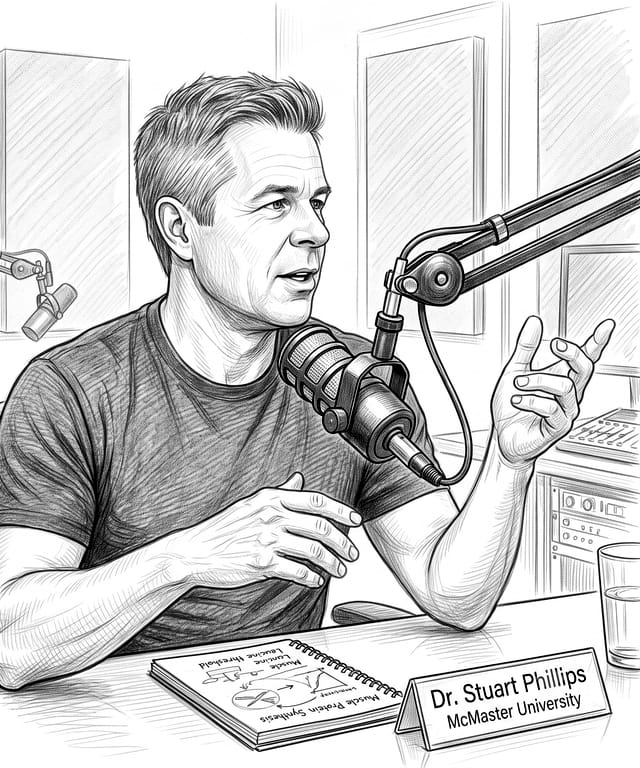
How Much Protein You Actually Need
Cut through the protein hype. Most people do well on about 1.2 to 1.6 grams of protein per kilo of bodyweight, and there is little benefit going higher, unless you are losing weight.
Work out your daily target Aim for roughly 1.2 to 1.6 grams of protein per kilo of bodyweight per day. For a 70kg (about 155lb) person that is around 85 to 110 grams a day.
This is the range the research supports for building and keeping muscle, well above the old deficiency-based number.
Split it across your meals Divide your protein across the day, roughly 20 to 40 grams per meal over 3 or 4 meals, rather than loading it all at dinner.
Your body can only use so much protein to build muscle in one sitting, so spreading it makes better use of what you eat.
Choose good-quality proteins Favor complete proteins rich in the amino acid leucine: dairy and whey, eggs, meat, fish and soy. If you eat mostly plants, combine sources and aim a little higher.
Higher-quality proteins trigger muscle building more effectively per gram.
Go higher when losing weight or older If you are in a calorie deficit to lose weight, up to about 2 grams per kilo helps protect muscle. Older adults also do better at the higher end (around 1.2 or more) to fight age-related muscle loss.
Both dieting and ageing make it harder to hold onto muscle, so a little more protein helps.
Don't sweat the timing Total daily protein matters most. The post-workout window is wide (protein within a few hours either side of training is plenty), so there is no need to rush a shake. An optional protein-rich snack before bed can support overnight repair if it fits your day.
Total daily protein is the biggest lever; timing is a minor detail on top of it, and the muscle-building response stays elevated for up to a day.
Do not bother going way higher There is no need to chase 200-plus grams a day for most people. Beyond about 1.6 grams per kilo you get no extra muscle for the effort or cost.
Phillips' consistent message: past the sweet spot, more protein is hype, not results.
Protein gives your body the building blocks for muscle, but there is a ceiling on how much it can use.
View sources
Stuart Phillips on Building Muscle and Reassessing Protein Intake (FoundMyFitness)
2025 was the year protein jumped the shark (Stuart Phillips, McMaster University / The Conversation)
Muscle protein synthesis is greater after 40 g than 20 g of whey following whole-body resistance exercise (2016)
Not medical advice. This page is for education only and is not a substitute for professional medical care. Consult a qualified clinician before changing your health routine.
Independent curation. YourProtocol is an independent platform. This protocol is based on the publicly available work of Stuart Phillips and is not created, reviewed, endorsed by, or affiliated with Stuart Phillips or McMaster University.
Is this for you
- Anyone confused by conflicting protein advice online
- People building or trying to keep muscle, including on a weight-loss diet
- Older adults wanting to protect muscle as they age
Cautions
- General education based on Phillips' published work, not a personalized nutrition plan.
- If you have kidney disease or another medical condition, get a protein target set with your doctor or dietitian.
- Protein on its own does very little for muscle without resistance training, see his training protocol.
- No products are sold here. You do not need protein powders to hit these targets, food works fine.