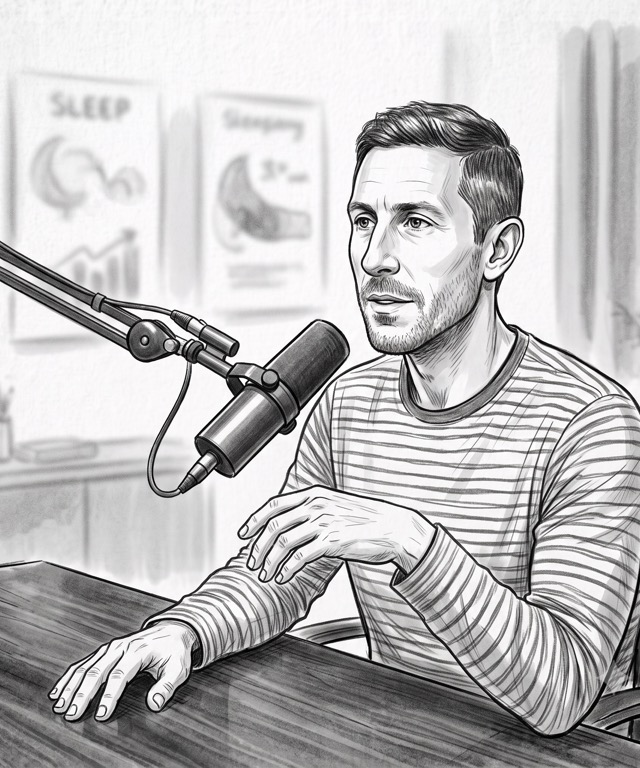
Environment-First Sleep Reset
Fix sleep from the room in, not the supplement cabinet: fresh air, total darkness, a steady clock and a stable dinner, with a tracker to prove what works.
Keep bedroom CO2 under ~900 ppm Crack a window or add airflow; measure it
CO2 building up in a closed room is linked to poorer sleep and a racing brain; ventilating below ~900 ppm improved sleep and next-day performance in a field study. An accurate NDIR meter (not a cheap estimating sensor) tells you where you stand.
Clean the air if dust or allergens bother you Run a HEPA purifier in the bedroom
A purifier cuts particulates and allergens that can disrupt sleep and breathing. Important: it cleans the air, it does not lower CO2; only fresh air does that, so it is a complement to ventilation, not a substitute.
Black the room out completely Total darkness, including standby LEDs
Even small light leaks suppress melatonin; Saladino rates blackout above most supplements. Cheapest version is covering a stubborn window with cardboard or foil, but good curtains look better and last.
Wear a contoured sleep mask For residual light curtains miss
Catches the light that gets past curtains, which matters most for light-sensitive sleepers. A contoured, 3D-cut mask avoids pressure on the eyes.
Same bedtime every night Within ~30 min, 6+ nights a week
A consistent clock steadies your cortisol rhythm and cuts night wakeups. Saladino calls consistency the single most important factor. No product needed: a fixed time and a reminder.
No blue light for 90 minutes before bed Screens away; dim, warm light only
Evening blue light suppresses melatonin. Best move is putting phones, laptops and TV away and reading a physical book. If you must keep a lamp on, a dim red or warm bulb is gentler; blue-blocking glasses are a fallback, not a fix.
Stabilise blood sugar before bed Protein and fat at dinner; skip heavy late carbs and sugar
Overnight glucose dips can trigger cortisol and wake you up. A protein and fat forward dinner keeps it steadier. This step is mostly free; a CGM is optional and only worth it if you like data.
Track your sleep with one wearable Watch trends, not single nights
You cannot improve what you do not measure. Pick one tracker and use it to see which changes actually help, rather than stacking everything blindly.
This protocol works from your actual levels. Testing partner coming soon.
- CO2 monitor
- Continuous glucose monitor
- Sleep tracker
We may earn a referral fee if you book testing through a future partner link; it will never affect which tests are listed here. This is not medical advice or a diagnosis.
A closed bedroom can climb over 1,000 ppm of CO2 overnight, which is linked to worse sleep and a wired, racing feeling; a field study that ventilated rooms below about 900 ppm measured better sleep quality and next-day thinking.
View sources
Paul Saladino MD #221: How to optimize sleep
The intimate details of my sleep routine (paulsaladinomd.com)
Bedroom air quality, sleep and next-day performance (Strom-Tejsen et al.)
Not medical advice. This page is for education only and is not a substitute for professional medical care. Consult a qualified clinician before changing your health routine.
Independent curation. YourProtocol is an independent platform. This protocol is based on the publicly available work of Paul Saladino and is not created, reviewed, endorsed by, or affiliated with Paul Saladino or Double board-certified MD.
Is this for you
- Light-sensitive sleepers and anyone in a bright or stuffy bedroom
- People who wake at 3am wired, from CO2, light or blood sugar
- Anyone who wants cheap environmental fixes before any supplement
- Data-minded people who want to measure what actually works
Cautions
- This is Paul Saladino's environment-first routine and general advice, not medical treatment. Ongoing insomnia, loud snoring or suspected sleep apnea needs a clinician, not gadgets.
- Saladino's published view is anti-supplement for sleep: he skips melatonin and even magnesium. We follow that here and sell no sleep supplements on this protocol.
- These are mostly symptom-layer fixes. If poor sleep is driven by chronic stress or a dysregulated nervous system, addressing that root matters more than stacking devices.
- Start with the free, high-impact steps (ventilation, blackout, consistent bedtime) before buying anything. A continuous glucose monitor is optional and, for people without diabetes, has limited evidence for improving sleep.
- An air purifier cleans particulates, it does not lower CO2; only fresh air does.
- Educational only, not medical advice.
Some links earn us a commission. It never affects our picks or grades. See our affiliate disclosure.